
The complete guide
How to choose the right horse blanket: denier, fill weight and fit
Every rug in this range lists three numbers that actually decide whether it's the right one: denier (how tough the outer fabric is), fill weight (how warm it is), and size (whether it fits). This guide covers how to read all three, plus the categories, turnout, stable, fly and fleece, that decide which job a rug is built to do.
Denier: how tough the outer fabric is
Denier measures the thickness of the fibre woven into the outer fabric. Budget rugs commonly start around 600D; tougher, more expensive rugs run 1200D, 1600D or 1680D. A higher denier survives fence contact, rolling and a horse rubbing on gate posts far longer than a lower one, but it doesn't by itself make a rug warmer, that's down to fill weight. A hardy horse turned out somewhere sheltered can do fine on 600D; a horse that's hard on rugs, or stood in an exposed field, is usually better served paying for the higher denier.
Fill weight: how much warmth is inside
Fill weight is measured in grams and tells you how much insulation sits under the outer shell. As a rough guide: 0g (no fill) suits mild weather or a horse already rugged underneath; 200-260g covers most of the UK's autumn and spring; and 300-400g is built for a clipped horse or a genuinely hard winter. Watch your horse rather than the calendar, sweating under the rug on a mild day means too much fill, shivering or a tucked-up stance means not enough. Most yards keep at least two fill weights in rotation across a season rather than relying on one rug for everything.
Turnout, stable, fly or fleece: picking the right category
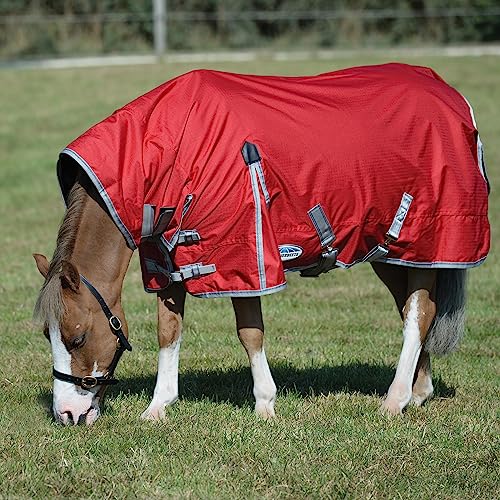
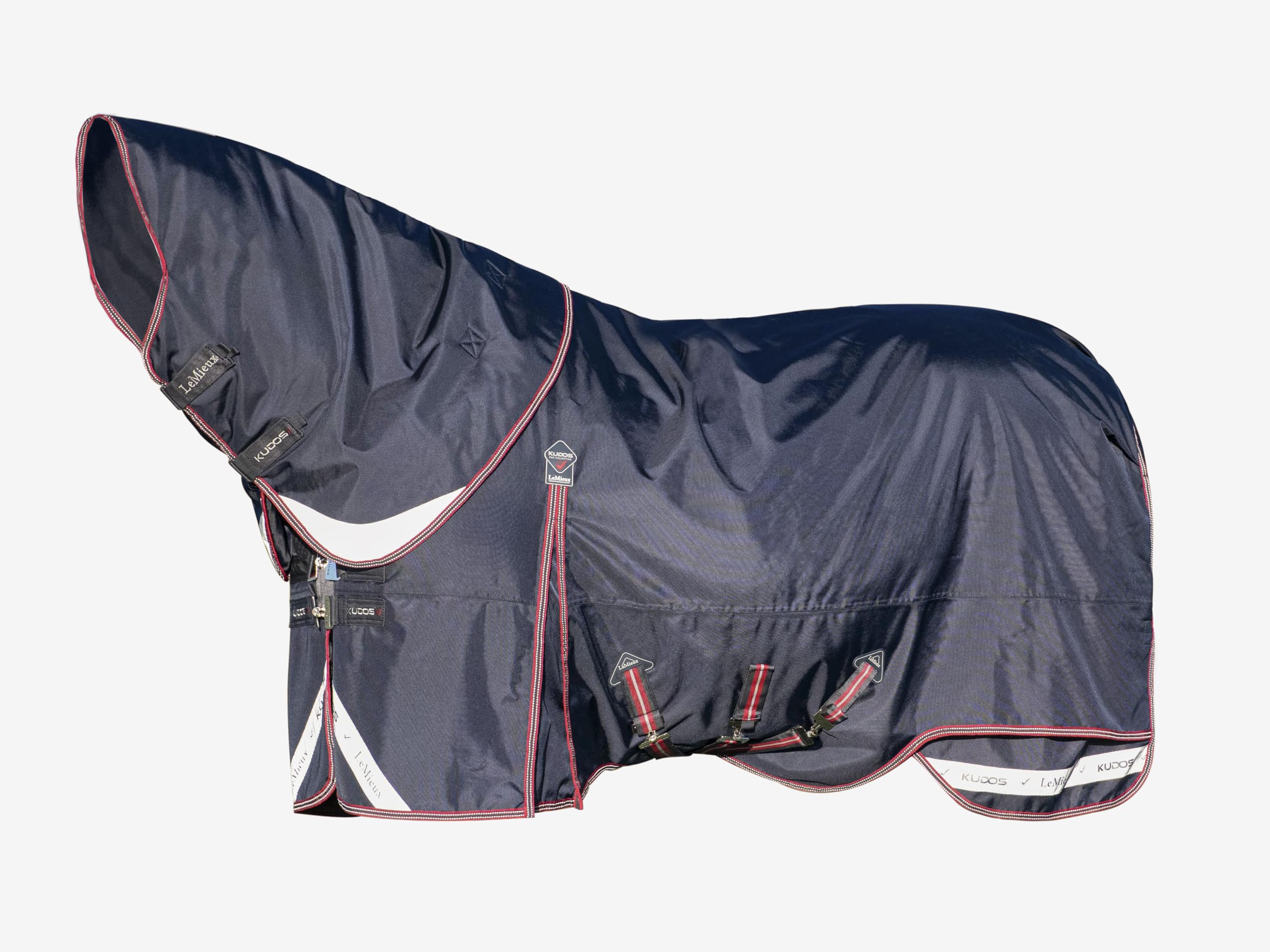
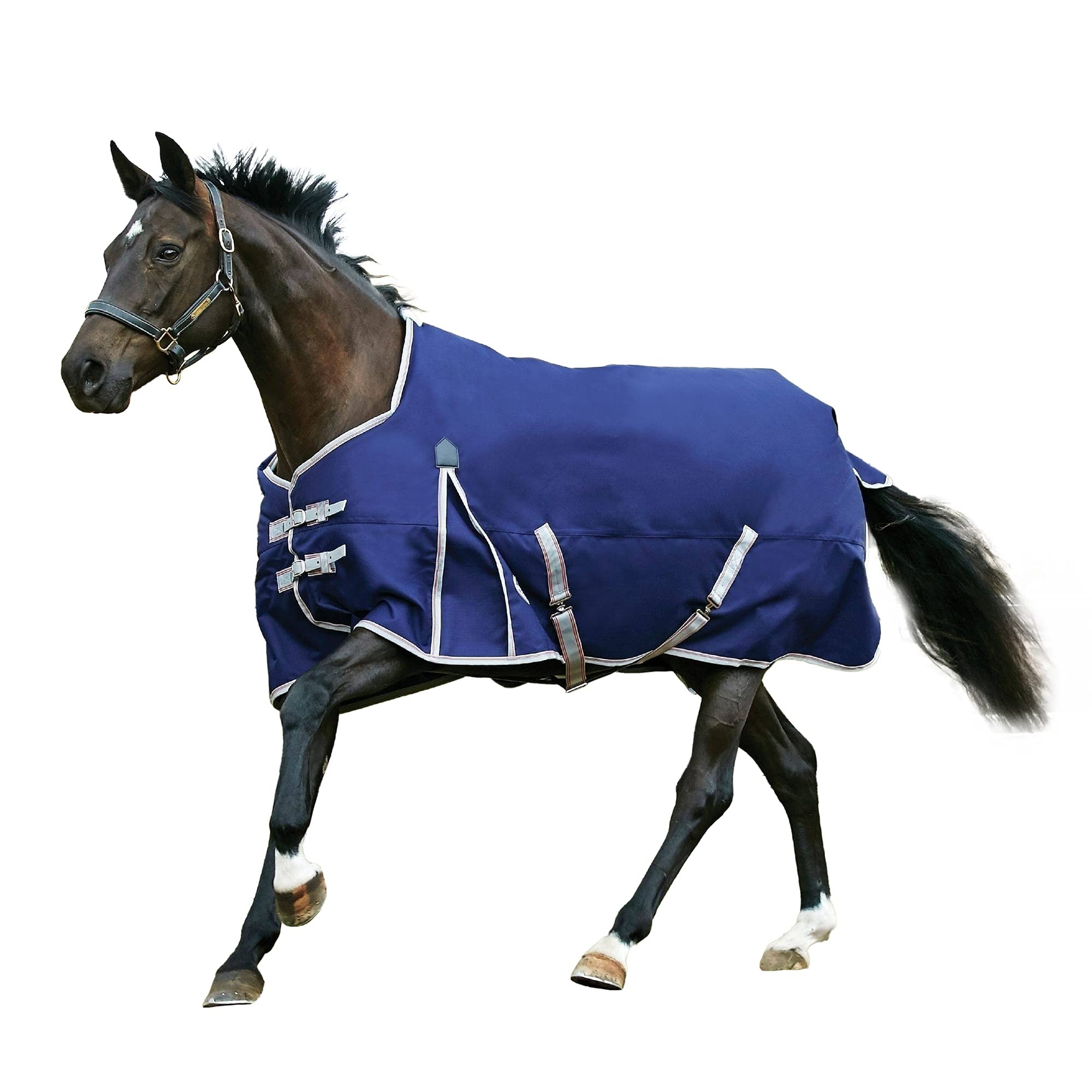
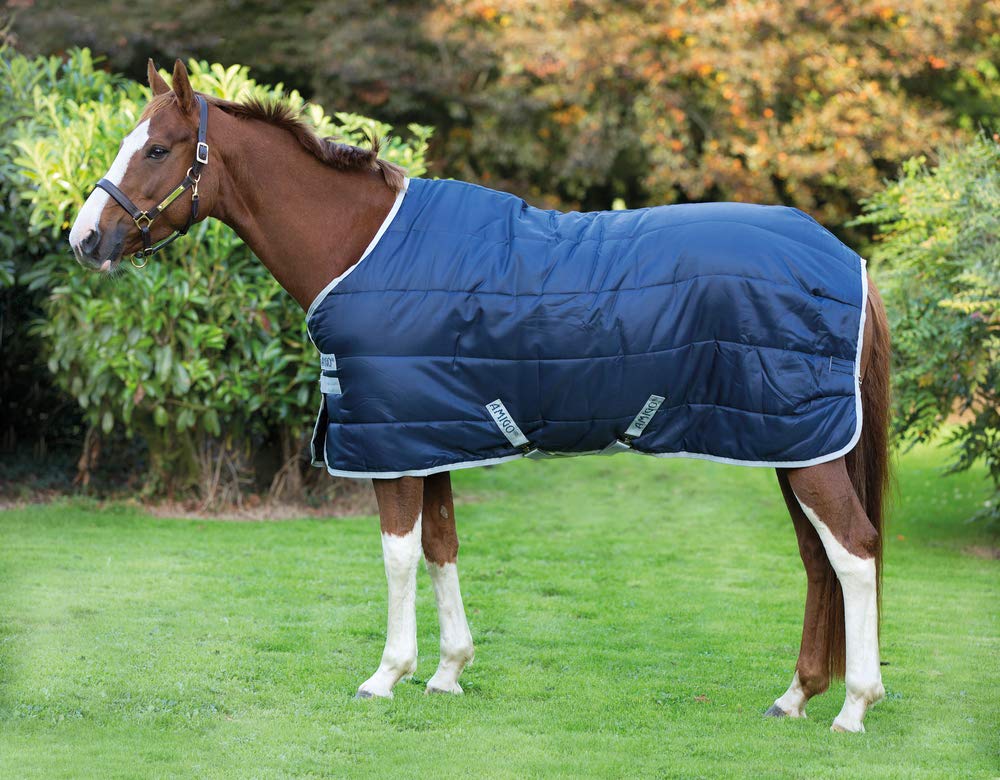
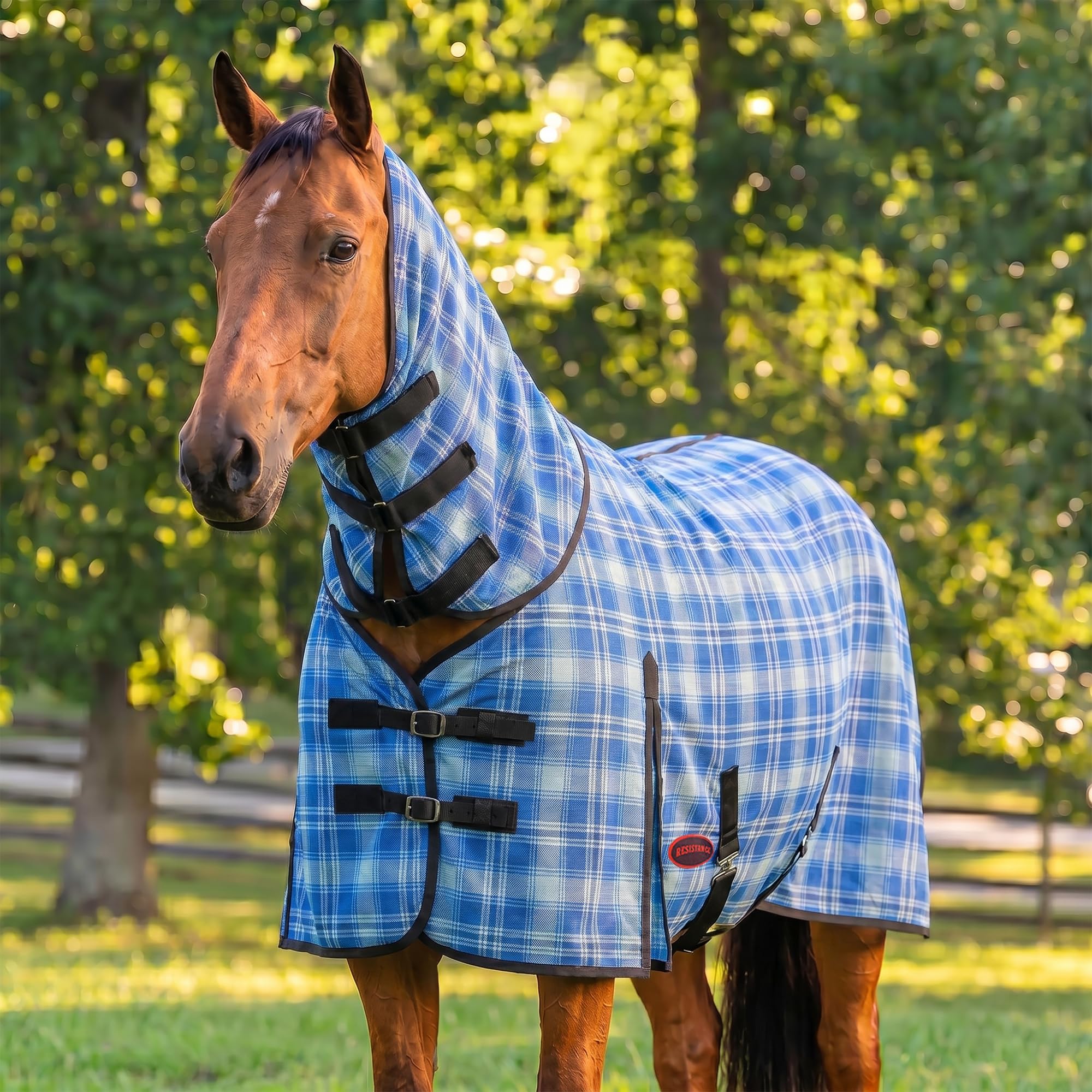
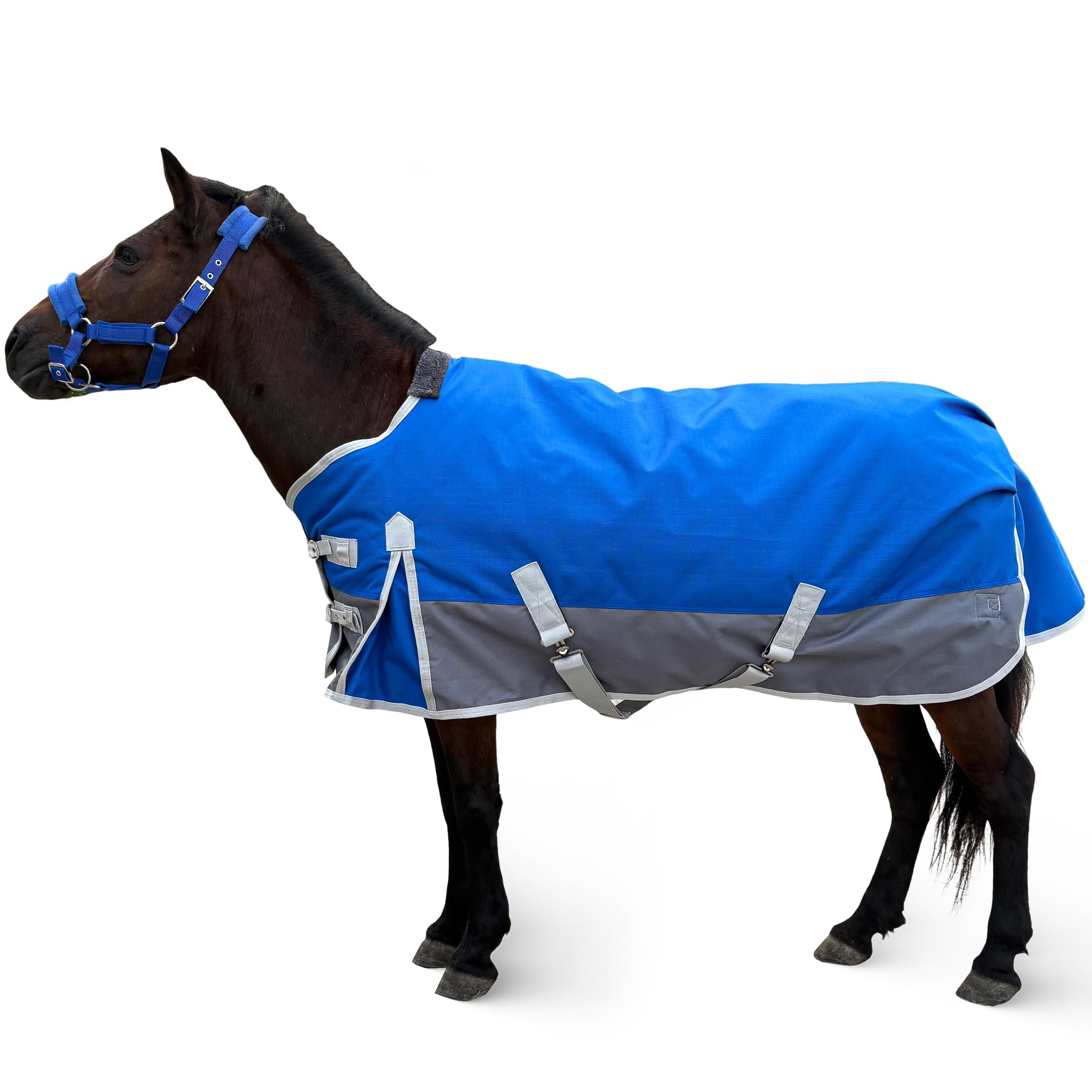
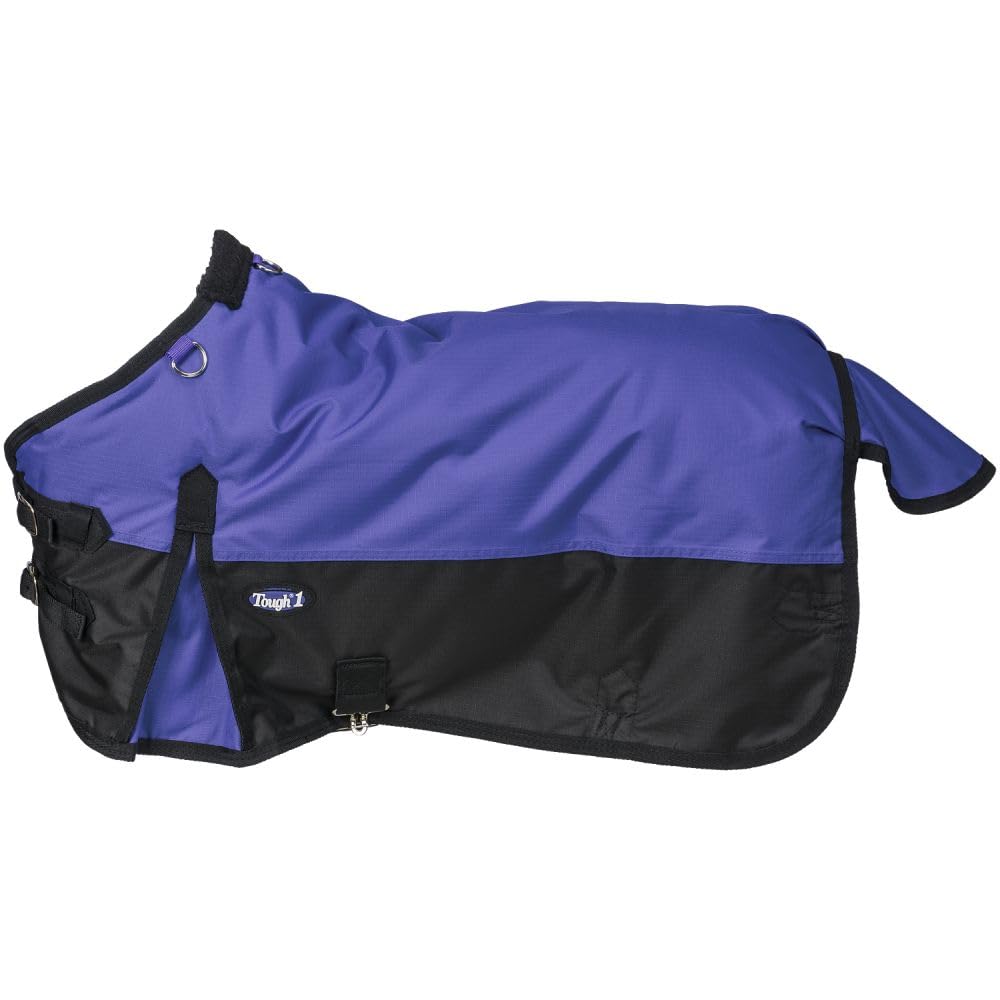
A turnout rug is waterproof and built for the field; using a stable rug outdoors in the rain, or a turnout rug indoors overnight, wastes what each is actually good at. Fly sheets swap warmth for a breathable mesh that keeps biting insects off through summer turnout without the heat build-up of a solid rug. Fleece coolers and liners aren't standalone turnout wear, they're for cooling a horse out after work, travel, or adding a layer of warmth inside a compatible shell on the coldest nights.
Getting the size right
Measure from the centre of the chest, along the side, to the point of the buttock, in a straight line, not over the curve of the body. That figure in inches is the rug size. If your horse falls between sizes, size up rather than down, a slightly loose rug is safer than one that pulls at the shoulders and rubs. Ponies, foals and minis need a rug cut to their actual proportions rather than an adult pattern shortened, which is why this range carries dedicated small-frame sizing rather than only scaled-down horse rugs.
Building a small rug wardrobe
Most yards do better with two or three rugs at different weights than one rug trying to cover the whole season. A sensible starting point: one lightweight or medium turnout for the shoulder seasons, one heavyweight for genuine cold, and a fleece cooler for travel and drying off after work. Add a compatible liner instead of a whole extra rug if you only need to bridge one cold snap.